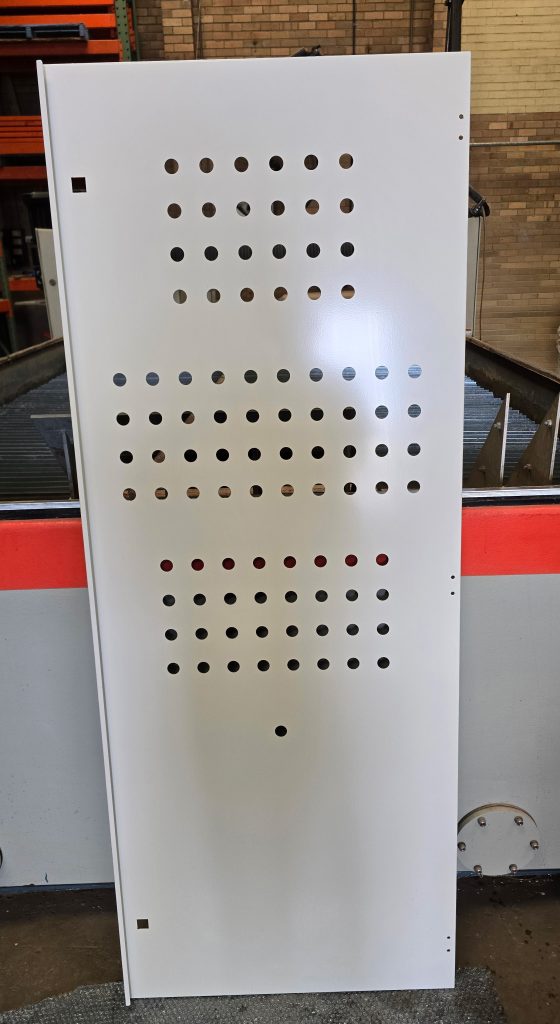
Oxy-fuel cutting, also called flame or gas cutting, has been cutting thick carbon steel for a century. It is cheap to run and it goes through plate that most other processes struggle with. It also puts a lot of heat into the part.
Part Engineering cuts thick plate on an abrasive waterjet in Osborne Park instead of a torch. Here is when that matters.
How each one cuts
An oxy torch preheats the steel and then blows pure oxygen onto it. The hot steel burns in the oxygen, and the stream carries the oxide away. It only works on carbon and low-alloy steels. Stainless and aluminium do not cut this way.
Abrasive waterjet erodes the material with water at around 60,000 psi carrying garnet. Nothing burns, and nothing gets hot.
Where oxy wins
- Very thick carbon steel at low cost. For heavy structural profiles where the edge will be machined or is not critical, oxy is economical.
- Simple shapes on mild steel. Large rough blanks for later machining.
Where waterjet wins
- Wear plate and hardened steel. Abrasion-resistant plate gets its hardness from a controlled quench. A torch reheats the edge and leaves a softened band, so the part wears first exactly where the abrasive hits. Waterjet leaves the hardness you specified. We cover this in more detail in why a torch-cut wear plate fails early.
- Flatness. Torch heat distorts long and thin parts and can bow a whole plate. A cold cut keeps it flat.
- Accuracy and holes. Oxy kerf is wide, and small holes are hard to cut well. Waterjet cuts accurate holes and small features, and our Tilt-A-Jet head keeps thick walls square.
- Stainless, aluminium, titanium, and non-metals. Oxy cannot cut them. Waterjet can.
- Clean edge for the next step. No slag, no hardened skin, so drilling, tapping, and welding are easier.
What about speed?
Oxy can be quicker on very thick mild steel, and its running cost is low. Waterjet is slower through heavy section. Count the rework too: straightening, grinding off slag, machining back a heat-affected edge, or replacing a wear part early.
A quick way to decide
- Thick mild steel blanks that will be machined anyway: oxy is fine.
- Wear plate, quenched-and-tempered or heat-treated steel: waterjet.
- Parts that must stay flat or hold a tolerance: waterjet.
- Anything that is not carbon steel: waterjet.
Very thick material and unusual geometry: send the file through the quote page and we will tell you if it fits the bed. More on the waterjet service.